
Digital Loneliness: Why We Feel More Alone in a Connected World
Digital loneliness:

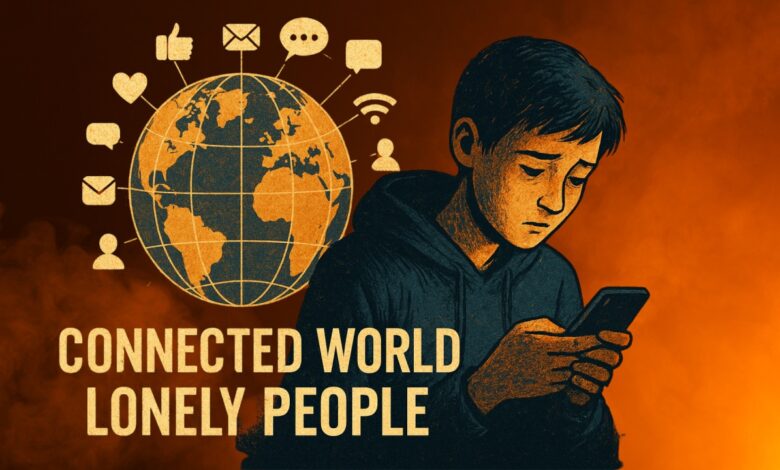
We live in a time where technology touches every part of our lives. Our phones stay with us from the moment we wake up to the moment we sleep. We scroll through updates, watch videos, reply to messages, join video meetings, and stay available online almost all day. Ironically, even though we are connected to more people than ever before, many of us feel emotionally alone. This growing gap between online communication and real emotional connection is known as digital loneliness, and it is becoming one of the biggest emotional struggles of our generation.
One of the biggest reasons for this loneliness is that online connection is not the same as real connection. When we interact through a screen, the conversation loses warmth, tone, body language, and emotional depth. A quick double-tap, a heart emoji, or a short reply may look like communication, but it rarely makes us feel understood. Real connection comes from presence listening, talking, sharing, and experiencing moments together. Digital interactions often stay on the surface.
Another major cause of digital loneliness is constant comparison. Social media exposes us to carefully selected parts of people’s lives. We see vacations, celebrations, perfect selfies, romantic moments, and professional achievements. What we rarely see are failures, insecurities, arguments, loneliness, or fear. As a result, it becomes easy to assume that everyone else is living a happier, more exciting life. Even if our own life is stable, this comparison quietly creates dissatisfaction. Over time, this dissatisfaction builds emotional distance between what we show online and what we truly feel inside.
The pressure to always “look fine” online also adds to this. Many people post happy photos even on days when they feel stressed or sad. This creates a strange situation: we appear connected but feel unseen. Digital loneliness grows when we are surrounded by people online but none of them truly know what we are experiencing.
Digital habits also play a huge role. Many people spend hours scrolling, gaming, watching videos, or switching between apps. The mind stays busy, but the heart stays empty. Endless content gives entertainment, not emotional support. Once we stop scrolling, we often feel a sudden emptiness. This emotional drop is a key sign of digital loneliness.
Another hidden cause is the need for validation. Every like, comment, or message gives a tiny moment of happiness a dopamine boost. It feels good, but only for a short time. As soon as the effect fades, we start looking for the next notification. This cycle creates mental dependence and reduces real-world interactions. When the phone is silent, the mind starts feeling restless or lonely.
Digital loneliness also affects our ability to form deeper relationships. Many people now prefer texting instead of calling, calling instead of meeting, and meeting less often than before. Slowly, social skills weaken. Conversations feel harder, eye contact becomes uncomfortable, and sharing feelings becomes rare. We become connected online but disconnected in real life.
However, escaping digital loneliness is not impossible. It simply requires a healthier balance between digital life and real life. Small steps can create big changes. Spending more time with people face-to-face automatically reduces emotional distance. Setting boundaries such as no phone during meals, no scrolling before bed, or taking a weekly social media break allows the mind to rest. Even simple habits like walking without headphones or talking to a friend instead of texting can rebuild emotional connection.
Digital tools were created to make life easier, not to replace human connection. Technology should support relationships, not control them. When we use it mindfully, we enjoy the benefits without losing emotional balance.
In the end, digital loneliness is not about being alone. It is about being surrounded by people online but still lacking genuine emotional connection. And that connection does not come from screens, it comes from presence, conversations, and shared moments. The solution is not to disconnect from technology, but to reconnect with people in a deeper, more meaningful way.
Conclusion
Digital loneliness is not about having fewer people around, it’s about missing real connection. When we reduce screen time and spend more moments with people in real life, the feeling of isolation slowly fades. A little balance between online and offline life can make a big difference in how connected we truly feel.
BY- RINAL RATHI